Next Steps
by Alisa Carmichael
Keeping watch for Jesus
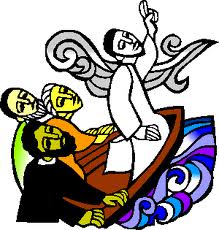 The Gospel reading for this Epiphany morning is from the sixth chapter of Mark and tells the story of Jesus walking on water, calming the stormy seas. Mark is the shortest Gospel, full of action and movement. (The word “immediately” appears 39 times; the narrative seems to be always rushing into the next scene.) When we read today’s story, it is important to remember where it is in the bigger picture. Just a few verses earlier, Jesus has fed the 5,000 with five loaves and two fish–a miracle! After everyone had eaten and all were full, the disciples picked up twelve baskets of leftover pieces of bread and fish. They must have been amazed by what they had witnessed.
In the scene today, Jesus has sent his disciples on ahead by boat, told the crowd good-bye and gone up on the mountain by himself to pray. A storm arises and the disciples are fighting against the winds. Jesus sees that they are in trouble and goes to them, walking on the water.
The scripture says “he intended to pass them by.” Isn’t that interesting? Perhaps he knew seeing him walking across the water would frighten them and that is exactly what happens. When they see him they think he is a ghost and are terrified! But Jesus calls out and says to take heart, don’t be afraid. He gets in the boat with them and the storm stops.
Unfortunately, the disciples just don’t get it. They are “astounded” but they don’t understand what has just happened. Somehow they didn’t understand that a miracle had happened, just as a miracle had happened with the loaves and fishes.
We are in the season of Epiphany, celebrating the revelation of Jesus to the world. In this story, the disciples at first don’t recognize Jesus coming across the water. Even when they know who he is, they don’t really understand who he is. They don’t get it.
There’s an old joke about a religious man who was caught in a flood. Someone with a rowboat came by & offered him help but the man said he was waiting on God and knew he would save him. A motorboat came by and stopped but the man said again that he didn’t need help because God would save him. The water kept rising and finally a helicopter came by but the man still refused help and said God would save him. The man eventually drown in the flood. When he got to heaven he complained to God that he had been faithful and God let him down.
God replied: “I sent two boats and a helicopter for you. What more did you want?”
So, today may be a good time for us to remember to call out to Jesus during the storms of our own busy lives, but also to watch for him to appear. There are miracles all around us every day. Sometimes we just need to watching for them!
Epiphany: Seeing the world a new way
 Do you remember Magic Eye?
It was a 3-D photo craze in the 1990’s, repeated flat patterns which at first glance seemed to have no real meaning BUT when you looked at them long enough, in a certain way, SUDDENLY a hidden image would appear.
I was never particularly good with Magic Eye pictures and would stand, shaking my head, squinting and making faces while my family would say: “Don’t you SEE IT? It’s RIGHT THERE!”
But sometimes….
I DID see it. There was a shift in reality and what I had perceived as flat changed into a robust image, jumping out of the page.
Oh, I get it! I see it now!
Epiphany.
We use the word in the secular sense to refer to mean: (1) a usually sudden manifestation or perception of the essential nature or meaning of something (2) an intuitive grasp of reality through something (as an event) usually simple and striking (3) an illuminating discovery, realization, or disclosure, (4) a revealing scene or moment.
It’s like the time you can’t quite figure out a problem from math class. It just doesn’t make sense. You can’t see how to solve it.
Then suddenly, the gears turn in your head. Things fall into place. And the solution is right there in front of you, as plain as day. Easy peasy.
In the church year we are now celebrating the season of Epiphany, which means for us the manifestation or revealing or disclosure of Jesus Christ to the world. There are several specific public events through which Jesus was made known: his birth, his baptism, his first miracle at the wedding at Cana. In the church year, we celebrate the coming of the Magi at Epiphany. The wise men brought gifts to Jesus. In some countries, children receive gifts on January 6 rather than December 25 in memory of the gifts the wise men brought. Their tribute is a forerunner of the day when all people will acknowledge Jesus as Lord and Savior and a reminder of the response we ourselves should make to Christ.
The word “epiphany” has to do with revelation and enlightenment, but I think it also carries an element of surprise. We are caught off guard a bit because the answer we had been trying so hard to find is ultimately something that seems so simple. How could we have missed it before?
Certainly, those at Jesus’ birth who had been searching sacred text and waiting so long for a coming Savior and Lord were surprised. How could a tiny baby born in a manger be both human and divine, here to save us and redeem the world? And yet, there it is. God’s answer, right in front of us.
Today is a first day back to school, back to work after the holidays. For many of us, that’s a little stressful. You might be feeling just a little fragmented, just a little bit like one of those Magic Eye images. If that’s the case, look around very carefully today. Pay close attention and you will see Jesus, walking with you this day and always. Happy Epiphany!

A Sower went out to sow….
 The parable of the Sower is a very familiar reading for all of us, found in 3 of the 4 Gospels. We see in it a perfect example of Jesus’ parables, stories that illustrate and enlighten by using vivid pictures from everyday life. Parables worked on multiple levels for Jesus’ listeners, and served many purposes, not the least of which being a relatively safe way to express revolutionary ideas in a dangerous political climate.
In this story a farmer goes out to scatter seed. Some lands on hard ground and is eaten by birds. Some lands on gravel, sprouts up but doesn’t last because it has no real root. Other seed lands among thorns and is choked by weeds.
And some lands on fertile ground and produces grain thirtyfold, sixtyfold, and a hundredfold.
Like most parables, there are many ways to explore and understand the story.
We might see ourselves as the seeds God is sowing. How am I growing? Am I like the seed on gravel, springing up with enthusiasm when I hear God’s word but not persevering and putting down roots? Am I in the thorns, choked by the weeds of worldly cares and busyness?
Chances are pretty good that none of us here sees himself as those seeds in fertile soil, producing thirtyfold, sixtyfold and a hundredfold.
Another way to look at this story is to see the seeds as God’s Word and we are the soil on which it lands. What kind of soil am I and how do I respond to the Word? Am I hard rock, too judgmental to let God’s mercy take root? Am I rocks and gravel, admitting in some ideas but not letting them grow and flourish?
Again, I don’t think we generally see ourselves as that fertile soil, feeding and nourishing healthy plants.
Barbara Brown Taylor writes that she always sees the parable of the Sower as a call to action, to improve, be different. I need to be a better plant, better soil, as she says,“so that if the same parable were ever told about me it would have a happier ending, with all of the seed falling on rich, fertile soil.”
Here’s another thought…..
Those of you who know me have heard me say that I’m no gardener. For years I had a reputation in my family as one who killed any houseplant that had the misfortune to land in our home. Other family members had green thumbs but not me. I left the business of gardens up to those who knew what they were doing and I stayed out of the way.
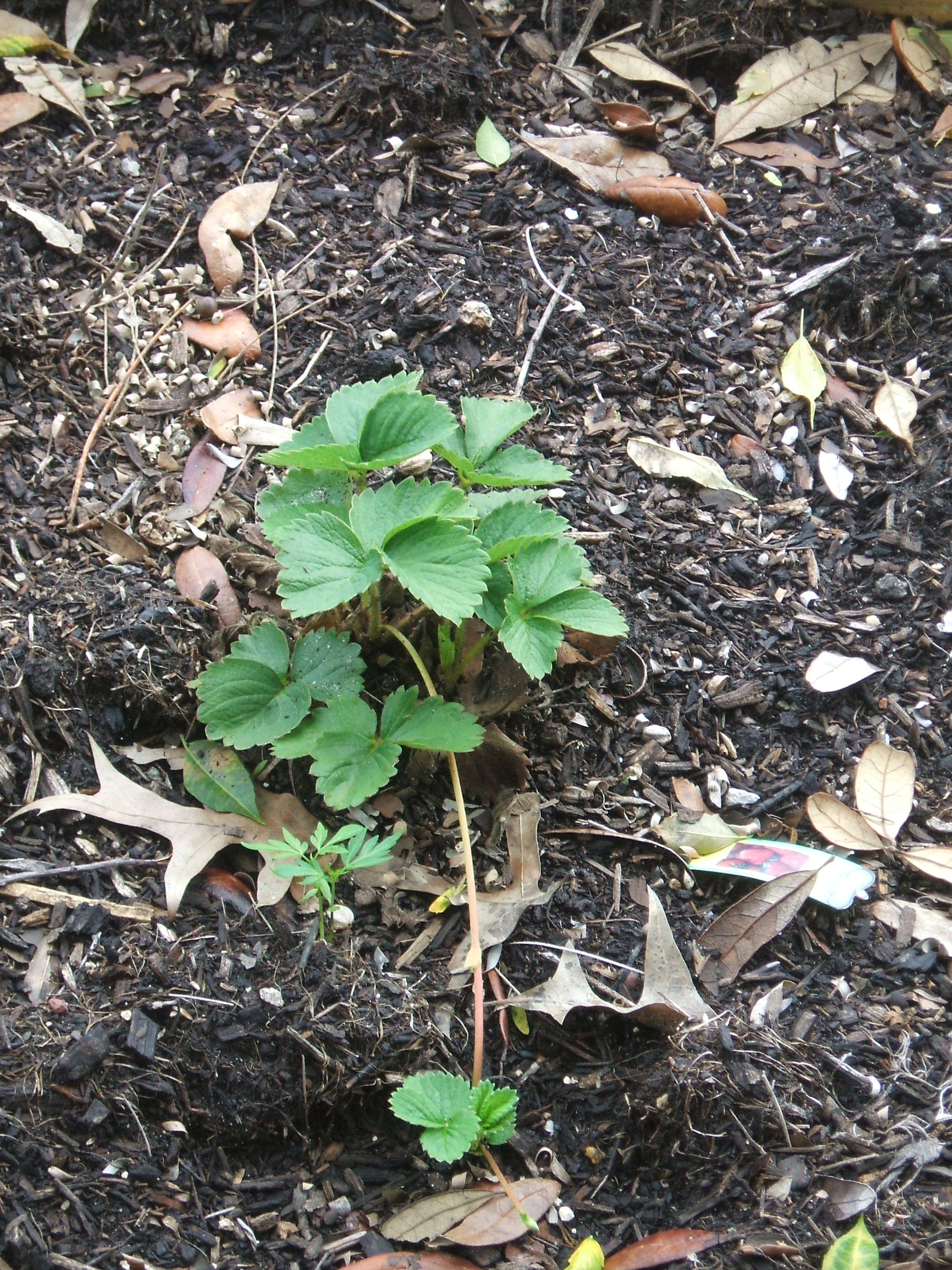
It is ironic–a bit of God’s humor, I suspect–that I found myself by default in charge of the garden planted just outside our Chapel. One of our former residents dreamed up the project, my son built it, and suddenly, there I was, mostly in charge with neither of them to help tend it. To honor their work, I was determined that I would somehow get something to grow in those boxes.
At first it was really intimidating. After all, I didn’t know what was supposed to grow or when to plant it. I’d go to Home Depot and wander through their vegetables and flowers, trying to determine from the labels what would grow with the most sunlight, the least amount of water. The most neglect. Something that you just could not kill.
I’d talk to the plants that I set out. I always felt a little guilty when I dumped them out of those tidy comfortable little plastic containers and placed them in our beds. Under my supervision. Before I left, I’d tell them to hang in there, be tough.
Surprisingly, some of them (OK, not all) did just fine. Some of them even grew, maybe not thirtyfold, sixtyfold and a hundredfold, but well enough.
So last spring I decided to go a step further and buy seeds instead of plants. More economical at $1.79 a packet. Surely they would grow too?
I went to Home Depot and wandered through the vegetables and flowers, but this time I went back to the seed racks.
Again, I was intimidated. There were so many racks, so many choices! Twenty types of lettuce! Martha Stewart brands! (At fifty cents more, were those really better than Burpee?) And the instructions—planting charts, when & how—how could I interpret those?
I asked a nice young fellow who worked there. He admitted that he didn’t personally have a garden, so he hadn’t ever tried any of the seeds. His dad, however, had had great success with growing stuff from seeds. (Unfortunately, he couldn’t specify what it was that his dad had found most indestructible.)
“Well, OK,” I finally told him (and myself). “I’ll just look through these and pick a few to try.”
“Sure!” he beamed. “Hey, what’s the worst that could happen, right?”
And that’s the thing….
Getting back to the parable of the Sower. Where is God in this story? The Sower, right?
So, why wouldn’t the Sower be planting ALL the seeds on fertile ground, in nice neat little rows with markers and a little fence to keep out critters? Instead, He is flinging those seeds EVERYWHERE! Hard soil, rocky soil, big patches of weeds. In His exuberant, extravagant love for creation, He is just pitching those seeds out.
And maybe that’s what WE should be doing.
Instead of being cautious and deciding who and what is “fertile soil” we should just get busy sowing seed. What’s the worst that could happen, right? Some surprises for us, perhaps? That person or project who didn’t seem “worthy” of our efforts? Perhaps they will be like that sweet potato vine out in that garden—just growing like crazy and spreading out the Good News, more and more.
Thirtyfold, sixtyfold, and a hundredfold….
Sojourner’s Welcome at Potter’s House
More about our spring break mission trip experiences….
On our first full day in Washington, I woke before dawn to the ominous sound of rain on the windowpane of our hotel room at Virginia Theological Seminary. Before breakfast I had already received a phone call cancelling our first DC mission activity: feeding and worshiping with the homeless at Church of the Epiphany’s Street Church. We spent the morning in a walking tour of VTS (mostly in the rain) and by lunchtime our team was cold, wet, and getting just a tad cranky.
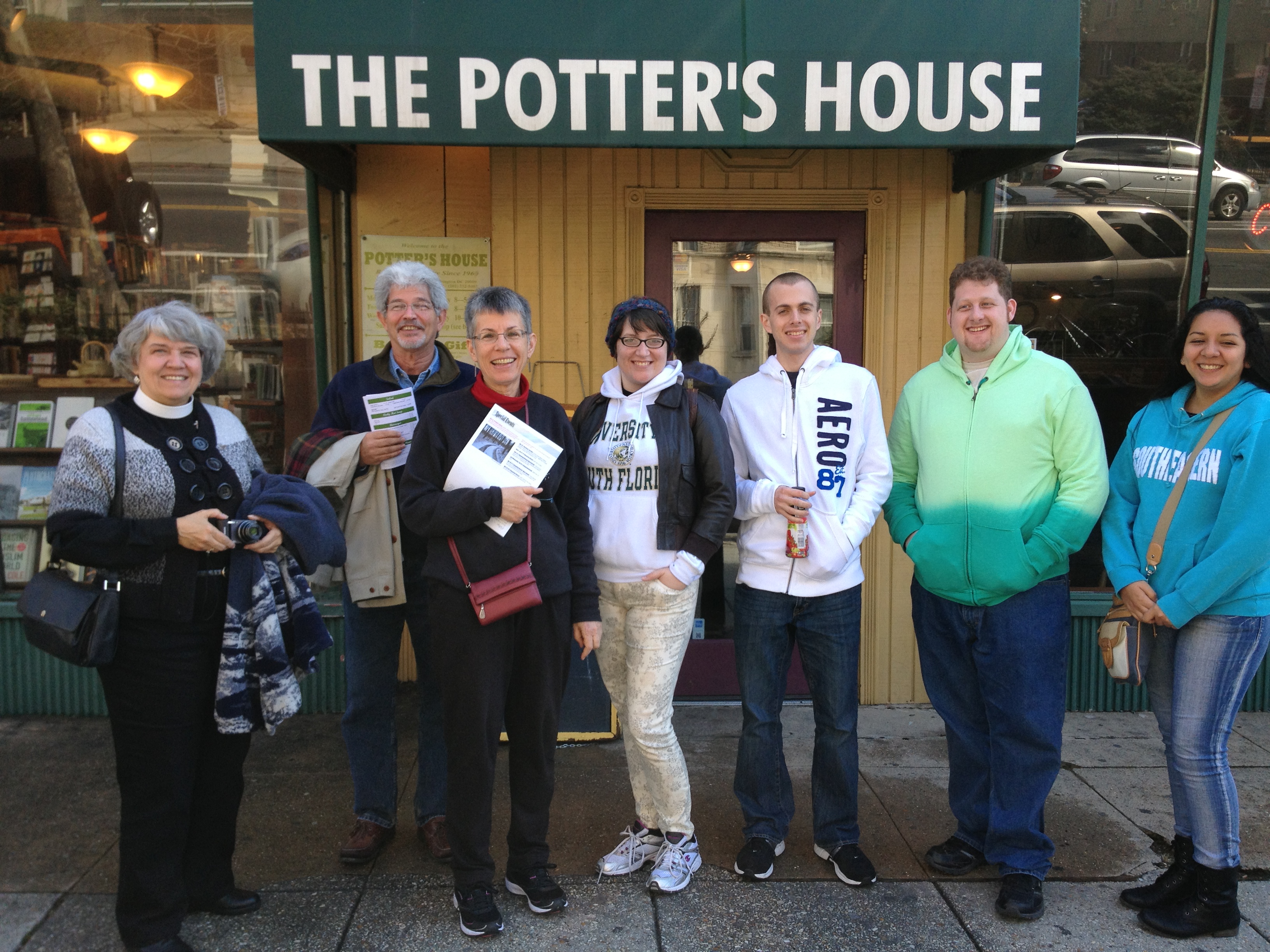
We loaded the diocesan bus and headed out for our next mission activity: touring the National Cathedral. On the way, we stopped in the Adams Morgan district for lunch. The Potter’s House, a ministry of the Church of the Saviour, is located in that neighborhood. We were hoping to attend one of their evening services but, remembering that they serve lunch, we decided to pay them an early visit.
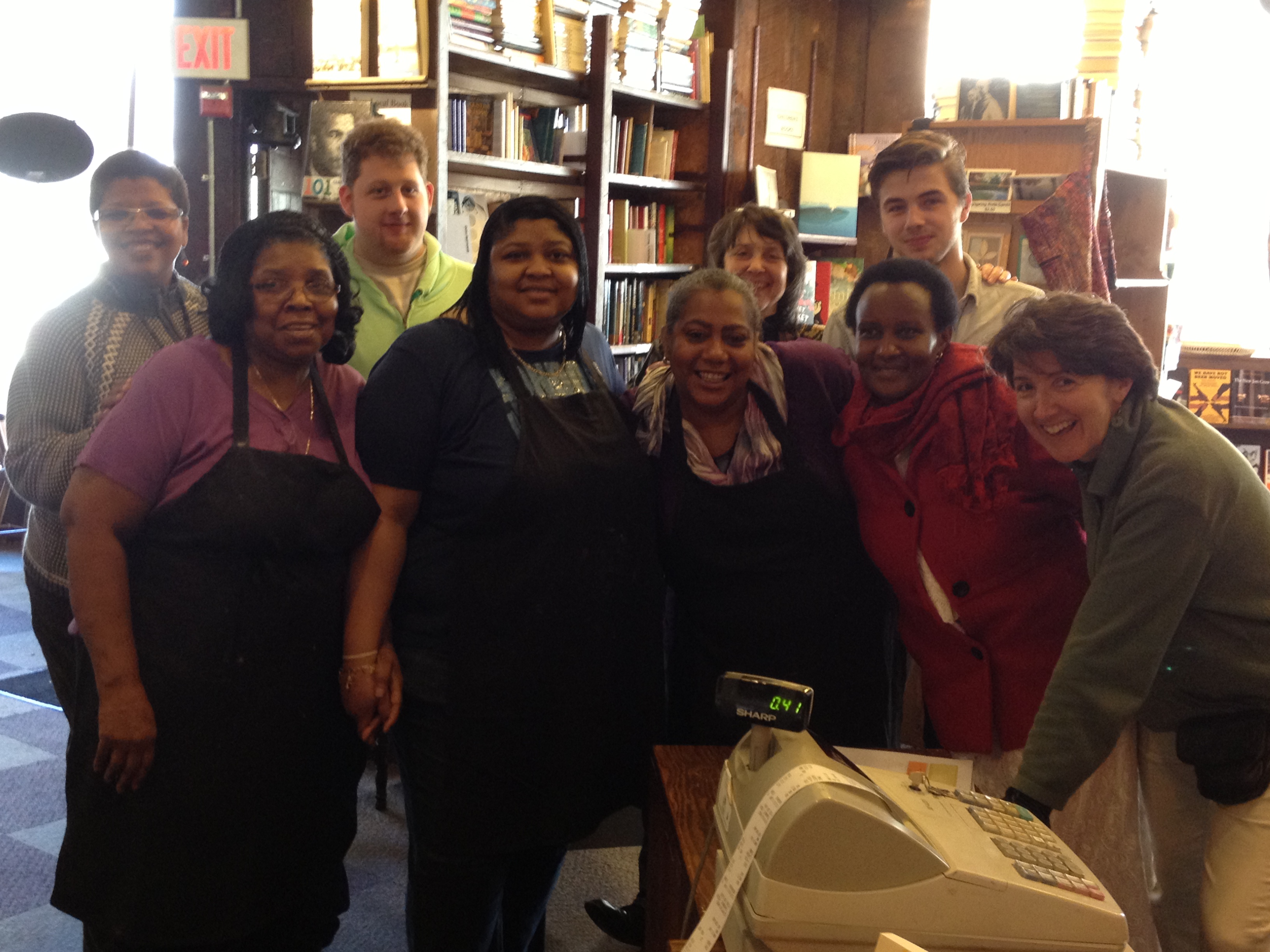
 As we walked into this bookstore/cafe/art gallery, one of the staff stepped forward to greet and welcome us. She gave us a quick overview of the menu offerings, reminded us that all the bread at Potter’s House is homemade, and invited us to grab a beverage (self-serve) and come back to a large centrally located table. She said once we were settled with our lunch she would join us and tell us about Potter’s House.
At this point I was getting a little rattled. Such a warm, sincere welcome. They seemed to be expecting us. Had I made an appointment here for us and forgotten to add it to our busy agenda? As I waited on our food and looked around, I realized that we were not unique, that everyone received a warm welcome at Potter’s House. What we were experiencing was simply biblical hospitality. Welcoming the stranger in your midst. Rest for the traveler, sustenance for the sojourner. What a radical concept!
Lunch arrived, every bit as good as the menu had promised. Our greeter also returned, carrying an extra plate of cornbread squares just in case any one hadn’t had a chance to try it. We learned that Potter’s House had first opened in 1960, “a beatnik-inspired coffee house.” During that turbulent decade, the conversations centered on social justice and eliminating inner city poverty. Potter’s House became, as their website attests, a “long running experiment in breaking down barriers.”
Today you can find many and various faith communities, discussion groups, and justice initiatives meeting at Potter’s House, including: Eighth Day Faith Community, weekly Taize services, Unbinding Lazarus (a support group combatting racism), Jubilee Church, Lectionary Lunch, and Friends of Jesus Church.
 Music, art, and books are integral to Potter’s House, which is also an independent bookstore specializing in spirituality and social justice topics. Breakfast and lunch are served, featuring a Southern-inspired menu.
The Potter’s House website states that they “seek to model a new way in which everyone who walks through our doors is equally valued.” We experienced that welcome in our visit. Don’t get me wrong–I dearly love the National Cathedral and we had a wonderful time there touring and attending Evensong. But our visit to Potter’s House is what stayed on my mind and heart that day. As we left there after lunch, one of our students told me that she had felt more “at church” there than she did at church. Amen!
What I Did On My Spring Break Mission Trip
 I recently spent spring break on a mission trip to Washington DC with seven other intrepid team members from the USF Chapel Center and the Episcopal Diocese of Southwest Florida. We drove a small diocesan bus up from Tampa, Florida, stopping overnight at Honey Creek Episcopal Conference Center in Georgia on the way up and back, camping out at Virginia Theological Seminary and later in downtown DC, six nights total on the road.
I’m not sure if “mission trip” is exactly the right term for our adventure, though we faced many of the trials and tribulations commonly known to mission teams, living and working together in close quarters with other folks who, prior to the road trip, may have been relative strangers. “Pilgrimage” is another possibility, I suppose, but most folks have a general idea of what a “mission trip” is. They tend to be impressed when you say you spent spring break on a mission trip.
The first question they ask is usually: “Oh! Where did you go?” (And the typical response: “Washington DC? Cool!”)
The next question that follows is, of course, “So, what were you working on there?”
The answer to that question is a bit more complicated.
The whole idea for going to DC came last fall when one of our students asked if we might take a trip up to see the National Cathedral.
I replied: “Great idea! I love the National Cathedral! Let’s do it!”
Of course we couldn’t spend our whole trip just on that one site. What else should we do? Well, one thought was that a trip to our nation’s capitol could perhaps include a look at advocacy, specifically:
- What (if anything) does the Episcopal Church do to advocate and support specific legislative action?
- What (if anything) should we be doing in our local parishes to support and influence public policies?
- All those candidates that I voted for (or not) during the election: what (if anything) are they doing now that they are in public office?
So, in addition to a visit to the National Cathedral, we scheduled a visit to the Episcopal Church Office of Government Relations. (You didn’t know we had one? More about that later….) We contacted our locally elected legislators and were able to schedule an appointment with Rep Dennis Ross, or at least with his staff member.
Another possibility for our trip was the opportunity to learn more about the Episcopal church and explore different some of the different ways we worship. We soon added to our agenda:
- A visit to Virginia Theological Seminary, including a campus tour, interview with a current student about VTS and the Episcopal Service Corps, and participation in Morning Prayer at the seminary
- Participation in “Street Church”, a ministry of the Church of the Epiphany in DC
- Attending Evensong at the National Cathedral
- A visit to The Potter’s House, a ministry of the Church of the Saviour
At this point in the planning process, the daily agenda was filling up and yet I still had the nagging feeling that unless there was a service project this just wouldn’t qualify as a mission trip. I started contacting social service organizations in Washington, only to find that most already had all the volunteers they needed for the days we would be in town. After quite a few polite rejections, an email reply came from Lucy, volunteer coordinator at A Wider Circle, saying they could happily use our group’s help at their nonprofit on Wednesday afternoon. What started out as a simple work detail there for us actually became an insightful look into a well defined service philosophy and an inspiring example of the impact one person can have to change lives and help build God’s kingdom. (More about that later, too…..)
Perhaps not your standard mission trip. (As one person said to me, “So, you’re not doing, like, REAL mission work on this trip, are you?”)
However, we learned a lot about our Church and ourselves. We met some amazing people who are quietly working to change the world and bring in God’s Kingdom. We experienced some Kingdom living. And I think we brought a bit of that vision back with us.
Perhaps the real mission work we did on this trip was inside our own hearts and minds.
And our real service is just beginning….
Picture This: Putting the Pieces Together
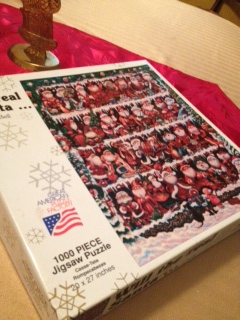 Among our many Christmas decorations is a box containing a 1,000 piece jigsaw puzzle. The puzzle picture is an illustration of about 32 nearly-but-not-quite-identical Santa Clauses, all with slight variations of tiny toys and gifts. I don’t remember when we got this puzzle–probably as an overly ambitious challenge for our kids back when they routinely did puzzles. (Smaller puzzles, with less pieces and more clearly defined illustrations.)
For some reason, I have for ages been setting this box out on the coffee table at Christmas each year, where it usually goes untouched until the decorations are packed up again. Perhaps it’s just that there’s something nostalgic about the idea of a jigsaw puzzle in progress, a nod to a leisure summer time when families worked on them together in the long evenings (no doubt between playing checkers and catching fireflies). It is, however, not something our family typically does either then or now but this year was different. While our grown children were home for the holidays, our son opened the box.
Have you looked at anything lately that was broken up in 1,000 small pieces? It is a daunting sight, to say the least, and pretty darn discouraging. Our kids, however, decided to give it a shot and started working on the frame.
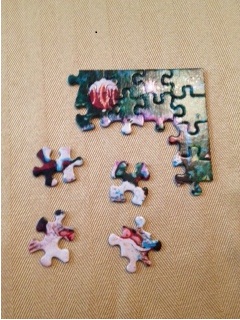
I had forgotten that finer point of puzzle construction: you pull out all the pieces with one straight side, build the frame, and then the interior sorta grows.
Except, in this case, when the outer frame was done there was still a HUGE pile of tiny red and white Santa pieces.
But our kids intrepidly carried on. I would occasionally wander over, breathe a mental “OMG!” and pick up a random piece on the pretense of helping. Invariably, one of the experts would eventually say, “Mom, hand it over. That piece fits over here.” And so it did.

And bit by bit, one by one, the Santas began to materialize.

This got me thinking about the number of times I have put off attempting something, not because it was particularly hard but because it looked like it would just take SO much time. Just too much trouble. Too exhausting to even consider.
I wondered how often we do the same thing in our churches and communities? There is so much good we could do but some projects look like just too big an investment of time and energy. We say we don’t have the resources but I wonder if that’s really the case. Maybe God’s already put everything there that we need. We just don’t see it because the picture is jumbled up in 1,000 little pieces. The person who finally lifts the lid off that puzzle box and starts digging out all those frame pieces generally will find the necessary resources as he or she moves ahead. And when those pieces start fitting together and the bigger picture starts to appear……amazing things happen!

Look Left/Look Right: Life Lessons from London Road Signs
 I had the good fortune of traveling to London over the holidays with the USF Herd of Thunder Band. We were there so that the band could march in the London New Year’s Day parade, but we got to do a lot of sightseeing and tourist stuff. It was my first trip to England and, quite honestly, I didn’t know what to expect. I wondered beforehand what sort of reputation Americans have in Great Britain. (We don’t always come across well in today’s media, I suspect.)
Andy, our guide for the week, happened to mention early in our visit that he had noticed that the British likewise don’t fare too well in American television and movies. He commented that when a British character is introduced in a movie, he or she tends to be stuffy, “proper” and a little out of touch.
The folks I met during my visit (including Andy) weren’t at all like that but were instead very gracious and charming. I noticed that this innate sense of polite behavior seems to extend even to posted signs. For example, a loading dock in the building behind our hotel gently requested that drivers “dim headlights whilst waiting.” Subway notices seemed to be casual observations: “Improvement work to tracks & stations may affect your journey” and “Obstructing the door can be dangerous.” Even the posted signs at the lake in St James Park are understated in reminding dog owners to keep their pets on leashes “to avoid disturbing the waterfowl.”

I thought there might be a few lessons to be gleaned from these novel posts and perhaps some reminders to carry into the year ahead.
Look Left. Look Right.
Information is a funny thing. (At least, how we use and/or abuse it is a funny thing.)
On the one hand, we sometimes purposefully withhold very important information from those nearest and dearest to us. (“If he/she/they REALLY cared, I shouldn’t have to tell them what I need.”)
I guess mind reading does work well in some households. Not, however, in most.
On the other hand, when given the right opportunity most of us present WAY too much information, drowning our children, spouses, students, committee members, employees, or other captive audience in a lot of useless details that really don’t matter to anyone but give us a chance to just keep talking.
Londoners have the right idea: give folks exactly the amount of information they need when they need it most.
While we were there I never figured out which direction would be oncoming traffic (since cars there drive on the “wrong” side of the road, according to American sensibilities) and if left alone I would probably never have known when it was safe to cross an intersection. Fortunately for me, when there was no pedestrian cross light in a London intersection all you had to do was look down at the curb. There you would see painted bold letters telling you exactly in which direction to look for cars before stepping out in the street.
Exactly enough necessary information. Not at all too much. If only we could communicate so clearly to those around us…
 Give Way.
One of our common American traffic signs demands that drivers “Yield.” The equivalent sign in London simply asks you to “Give Way.” Move aside. Let someone else ahead if needed, rather like letting another group play through on a golf course.
When I read that something “gives way” I usually think of collapse or surrender: “When the piano bench suddenly gave way under her weight, Margaret found herself sitting on the floor.” However, consider “Give Way” as letting others go first. Letting that other shopper ahead of you at the grocery store. Letting someone else talk while you really listen (instead of just waiting for your chance to grab the conversational reins again). And, of course, letting that other driver slip in before your car on the highway.
Mind the Gap.
This was probably my favorite. When riding the subway, the recorded voice announcing each station along the way frequently will remind passengers to “mind the gap between the train and the platform.” Watch your step, we might say. “Mind the gap,” for me, conjured up the very concept of mindfulness. The idea that, no matter how tired I might be at the end of a long day, no matter how my feet might be hurting or my packages getting heavy, I was encouraged to consider carefully where I was and what I was doing. Pay attention. Be present. Engage.
As a new year begins, remember to:
Look left. Look right.
Give way.
Mind the gap.
And safe travels on the journey ahead….
Chapel Center History: Church on the Campus
The next installment in our Chapel Center history…..
When the University of South Florida opened, President John S. Allen initiated a plan for USF to lease land on campus for religious centers. The first of these to be completed was the Episcopal Chapel Center, designed by the Rt. Rev. William F. Moses, Suffragan Bishop of the Diocese of South Florida. Construction began in May 1962 and a cornerstone was laid on May 27, 1962 by University President Allen, Dr. George Hood, and the Rev. Canon William Brace.
(The cornerstone was opened in 1987. It contained a Bible, a copy of the ground-breaking ceremony, and a newspaper dated May 27, 1962.)
The Chapel Center construction was completed during the summer, with the first worship service held on October 10, 1962. (The first Vestry Committee was formed four days later on October 14.) The total construction cost was $73,000. The Center contained a simple chapel, sacristy, common room with kitchen, library, offices, and a room and bath for a student resident.
The diocese had purchased a home for a university chaplain at 313 Sunnyside Ave, Temple Terrace, prior to opening the Chapel Center. This was for Rev. J. Fred Dickman, who was appointed to be the first chaplain in August, 1961. Working out of his residence, he counseled students from USF as well as University of Tampa. He taught part-time at USF while also completing doctoral studies at the University of Florida. The University Chapel Center congregation at this time consisted of fifty students and twenty faculty members.
On December 13, 1962, just after the Chapel Center dedication in November, Fr Dickman resigned as university chaplain to become Rector at St Andrew’s in Tampa. It is recorded that Fr. Dickman presented the Chapel Center with a portrait of Bishop Moses, which was displayed for many years at the Center.
The Rev Grant D. Noble was the next appointed chaplain, serving from July 1963 to August 1970. USF enrollment had grown to 4,500 students by this time and Chapel Center history records that 250 of these students were Episcopalian. The Chapel Center became a Mission of the Diocese on May 12, 1965. Parochial reports for that year number 26 communicants, 58 baptised members, and 51 students attending weekly services. Local parish churches actively supported the Center; members from St John’s, Tampa, donated funds to help purchase an organ and Episcopal Churchwomen helped with funds for the baptismal font.
When you observe the busy daily traffic flow on 50th Street today, it is a little hard to imagine that the Chapel Center was once quite isolated. 50th Street in the early 1960’s was a dirt road which led from Fowler Avenue to the Center. In the summer of 1963, 50th Street was paved between Fowler and Fletcher Avenues. In the fall, faculty and student work parties began the arduous task of turning the sand lot around the Center into landscaped grounds and walkways.
Rev. Noble published an article titled “Church on the Campus” in the October 30, 1966 edition of the national Episcopal Church’s monthly publication, The Living Church, providing an interesting snapshot of campus ministry at this time. There is an introduction into the concept of life on a “commuter” campus, where “a majority” of students are working outside jobs while enrolled in school. The emphasis on accommodating the employment schedule of students by a somewhat flexible academic calendar was, as Rev Noble says, “a far cry from the atmosphere of Yale or Williams” where he had previously served in campus ministries.
By the time this article was published, a Baptist Student Union and joint Presbyterian-Methodist Center had been joined the lineup on 50th Street. Rev. Noble reports that every new student had the opportunity to hear the various chaplains talk about religious life on campus. The university also compiled the lists of students from the various denominations, passed these lists on to the appropriate chaplain from each denomination, and scheduled time during orientation for university chaplains to speak to parents in attendance.
Rev. Noble describes the work of the chaplain at this time to be ecumenical and inclusive in nature:
The primary function of the Church program, and the way in which I believe we may prove most effective, is to establish a church on the campus where students, faculty, and staff and their families worship, work, and play together, thus bringing students into the body of Christ where there are all ages, a situation similar to the parish church or mission in which they will worship all the rest of their lives.
This emphasis is important at a time in their lives when doubts are crowding their thinking and they need the warmth and reality of a church family to fortify their faith.
Rev Noble goes on to describe the various activities of the Chapel Center: social action projects, a fall welcoming buffet and hootenanny, Christmas Eve service, Shrove Tuesday pancake supper. (Parish records indicate that there were indeed weddings, baptisms, confirmation classes and a variety of social functions at the Chapel Center.) However, the activities of a campus ministry, Rev Noble emphasizes, will be different from a tradition parish:
The chaplain of the Church on the campus can never think in terms of large congregations or dollars raised. His work, like our Lord’s ministry and the heart of the Church’s work, is to touch and help individual souls. He does not wait in his office for students or faculty to find their way to him. He goes out on the campus, into the coffee shop, the cafeteria, the swimming pool, the athletic field, the dormitories, the infirmary, etc. These contacts produce the most telling and often the most intimate conversations with people who, perhaps, have rarely or never been to church, and who may be in real need of the Church’s help.
The encounter may be brief–students come and go, and faculty, in young universities, move on in the line of promotions–but there is a great satisfaction in its depth.
In 1969, the Diocese of South Florida divided into three separate dioceses and the Diocese of Southwest Florida was formed with Bishop William L. Hargrave as its first bishop. In August 1970, Rev. Grant Noble resigned from the position of USF Chapel Center Chaplain, and another page was turned on Chapel Center history.
Chapel Center History: Flashback to the 60’s
 We are getting ready for the new school year, looking ahead to November 17, 2012, which means we are looking back 50 years to the original founding of the USF Episcopal Chapel Center on that date in 1962. Looking over old photos and chapel records may give a sense of the historical narrative of the place, but the story of the Chapel Center really has to be interpreted in a much larger framework. The opening of the Center in 1962 occurred, after all, just a very few years after 1956, the year that the University of South Florida opened.
USF currently boasts a campus enrollment of 40,429 students, with a total of 47,576 students on four campus locations. The USF campus covers more that 1,700 acres in Tampa and also sponsors more that 60 study abroad programs in 25 countries. The university has received many accolades for its various academic programs as well as athletics. (Go Bulls!) According to a recent article in the Tampa Bay Times, a student can currently expect to pay an annual whopping $20,000 to attend USF.
Compare this to 1960–just two years before the Chapel Center opened–when the first official term started at USF with a total of 1,997 students. The university then offered 61 classes, with a total faculty of 134 instructors. (The average age for a faculty member at that time was 39.) Tuition was $180 for a year. Textbooks for one year cost $50-$100. The food plan cost $374, or $11 per week and 52 cents per meal.
In the opening convocation for that first year, Florida Governor Collins said the following in his speech:
“A curious manifestation of our time is the ‘beatnik.’ I am not a specialist on this subject, but I do not think beatniks are merely reacting to or protesting against what they consider to be wrong values of our society, as some would have us believe. They seem rather to represent an astonishingly stupid and egotistical rejection of our entire culture without making any meaningful effort to effect corrections of what they regard as wrong…..The beatnik is rejection and withdrawal into self in an obvious form. But we have more beatniks in America than you will find wearing beards and dirty clothes in coffeehouses. The same egoism and self-centeredness is also found in people living in ranch-style houses and driving expensive cars….The extreme of these citizens say unto themselves:Nothing in this world is really worthy of me. Some of the less extreme will say that nothing is worthy of me but my family, or my business, or my profession.”
He ends his speech with:
“Seek out the opportunities for leadership through which you may repay society and enrich the democratic process which has made it all possible. This, students, will be Florida’s claim upon you.”
Though USF was promoted as Florida’s first “urban” university, the reality was somewhat different. Margaret Chapman, first Director of Student Personnel, has said:
“Urban, my foot, this place was as rural as you could get. There were more owls here on campus than there were students. It took the hunters a while to realize it was permanently closed season on hunting here. Every once in a while a bullet would zing across the mall.”
 Among the pressing issues of the day was the dress code. Females started wearing shorter skirts. (“Short” meaning above the knee.) One male student is recorded as complaining: “I don’t like to look at the back of girls’ knees.” A female student also responded: “No one has beautiful knees.” In 1961, a campus event later dubbed “The Shorts Riot” took place, in which fifty students marched in protest of the dress code, an apparently ongoing sore point in adminstration/student relations.
In 1962, power was cut around campus at midnight on March 4-5 and resident males staged a “panty raid.” 150 male students gathered in the parking lot of Alpha Hall, talking and setting off fireworks. The crowd dispersed around 2:00 a.m. when power was restored. Everyone seemed to have enjoyed the event and one female student was recorded as saying:”You men should do this more often.”
In 1963, plans were announced regarding the creation of gigantic fallout shelters under the Chemistry, Library, Alpha Hall, and Teaching Auditorium buildings. The Cuban missile crisis served to push the plans forward and, altogether, five shelters were built to house 4,000 people. Supplies were donated by the local Civil Defense organization, with food supplemented by donations from Morrison’s.
In 1964, USF students protested to Life magazine that they had invented skateboarding, not university students from California. USF publications had apparently documented the craze at USF prior to Life magazine’s coverage of California skateboarding. Skateboarding was so popular on USF’s campus that the Residence Council took measures to limit the activity to certain time slots in an effort to curb the disruptive noise on campus.
And, in 1962, in the midst of all these highly diverse activities, the USF historical timeline records: “The Right Reverend William L. Hargrave delivers the sermon at a ceremony to dedicate the Bishop William Francis Moses Episcopal Center on the USF campus.”
The Episcopal Church in southwest Florida was at this time part of the burgeoning Diocese of South Florida. The post-WWII population was booming in Florida and the Church likewise enjoyed this growth. (At one time during the 1950s, a new congregation was being created every six weeks!) Bishop Martin J Bram was elected suffragan bishop in 1951 and served until 1956, when he died suddenly from a heart attack.
 Bishop William Francis Moses, who followed him, established and even designed the Chapel Center. Unfortunately, in 1961 Bishop Moses also died suddenly from a heart attack, not living to see the Center which originally bore his name. Bishop William L. Hargrave, elected as suffragan bishop for the newly formed Gulf Coast Archdeanery, officiated at the dedication service for the new Center on November 17, 1962.
Next up: a look back at the early days of the Chapel Center. If you were a part of this fledgling church and have stories to share, I’d love to hear from you!
Discovering Jubilee: Revolution, Redemption, and Radiohead
One of the t hings I love about visiting my daughter and son-in-law is the opportunity to attend worship services at their church. Revolution (Kansas City) is a United Methodist mission located in a traditional old church building in the urban Westport neighborhood. Sunday morning worship there is a refreshing mixture of new and old, and for me it is always a welcome breath of fresh air.
Their stated mission is to “serve with passion, worship with relevance, and love without judgement.” A strong commitment to social ministry is evident throughout the worship service and (especially) in the activities of the church. As a member of the congregation, you have ample opportunities to serve in fellowship with your church family.
Worship with relevance is a wonderful mixture of the old and new. Hymns include some of the old Baptist hymns I remember from my grandmother but the words are up on a screen and the music is played by a band that may or may not include singers, guitar (electric or acoustic), drums, and even a little harmonica. The congregation is encouraged to bring their Bibles to worship, but as the sermon begins I notice that about half the Bible toters are folks sporting iPhones with Bible apps. (And that was definitely OK.)
Finally, love without judgment is evidenced in everything from the casual (but reverent) atmosphere to the preached message to the folks still standing around chatting in the sanctuary, 30 minutes after worship had concluded.
This summer we happened to attend during the last two weeks of four week study of Leviticus. I knew in advance that it was gonna be good.
The sermon for the first week (week 3 for the gathered assembly) dealt with the rules and regulations of Leviticus, focusing on the original intent to promote the survival and identity of the Israelites and their preservation as a holy people. And how might we write the rules of Leviticus today to promote the survival and identity of our Christian congregations?
“Thou shalt not text while driving”?
“Wendy’s Baconator shall be considered an abomination to you”?
More importantly, what guidelines would we use to set us apart from contemporary culture as God’s holy people?
Think about it! Interesting question, isn’t it? Just wait. It gets better…..
The second week we were there, the message focused on the Year of Jubilee (Lev 25: 8-12).
The Year of Jubilee was to be a hallowed time, a time set aside every 50th year for rest and rejoicing. All debts would be forgiven, all prisoners released. It is a very real reminder that we do not own anything on this earth but are only “strangers and sojourners,” totally dependent on God.
What’s that, you say? All mortgages cleared after that 50th year? All the prison doors opened and the criminals released back into our midst?
At that point in the sermon, Pastor Eric reminded the congregation that the word “criminals” in Old Testament prisons referred to debtors. (The punishment for violent crimes was much more swift, certain, and severe–no expectation of rehabilitation and release!)
And that got me thinking….
Many of us have struggled with unusual debt in the past few years and with our own forms of “debtors’ prison” due to unemployment, rising medical expenses, home foreclosures and short sales, student debt and excessive credit card debt. For many of us, the burden seems overwhelming–a hole that gets deeper and deeper.
But, if you are currently locked away in today’s debtor’s prision, consider what it would be like if the next harrassing phone call you got, the next scary letter from your lending agent simply said:
“Congratulations! This is the Year of Jubilee. The balance owed on your account is now $0.00. You are now free and clear. Go and have a wonderful life.”
When I considered this, the meaning and significance of all the New Testament parables about debts, debtors, and forgiveness suddenly shifted for me. How incredibly amazing would it be to have your debts really forgiven?
Go a step beyond. How wonderful would it be to have the burden of all those things you did and shouldn’t have, all those times you could have helped and didn’t….
Forgiven?
Erased?
Wiped clean?
Of course, I wondered as I listened to this sermon, how did all this work out for the Israelites? And also, why have I NEVER heard about this scripture before?
As it turned out, the year of jubilee was apparently never implemented. (Just not practical when you think it through, you know….)
But we know the Year of Jubilee. We are privileged to experience Jubilee in Jesus, we are redeemed in the gift of his body and blood.
And as my family deals with the fiscal difficulties of the current economy , the message of Jubilee has not left me. There is redemption and there is reason to hope.
And Radiohead, too, you may ask?
As we finished the service at Revolution and the band concluded the final hymn, the musicians popped some recorded music into the sound system. After a moment, I recognized “Paranoid Android” from OK Computer.
Redemption, release, and Radiohead, too?
Yes, indeed, I do love worshiping at Revolution…..
 Next Steps