Next Steps
by Alisa Carmichael
Jazz in the Liturgy & More: Canterbury House at University of Michigan
 Recently I reviewed Better Get It In Your Soul: What Liturgists Can Learn from Jazz, a new resource on creativity in worship written by Reid Hamilton and Stephen Rush, chaplain and music faculty advisor at Canterbury House at University of Michigan. I was delighted with the book, wanted to learn more, and consequently contacted the authors, who were every bit as gracious and welcoming as their book had led me to expect. The following is from my phone interview with Fr Reid, as well as information gleaned from the Canterbury House website, which is a great introduction to their people and programs. The CH mission statement summarizes pretty well what they are all about:
- A progressive alternative for Christians and other spiritual seekers
- Devoted to the spiritual growth of the students, faculty and staff at the UofM
- Committed to integrating the intellectual, spiritual, emotional and socially responsible dimensions of student life and culture
- Dedicated to finding God without twisting arms or sacrificing reason
- Combining new artistic expressions with ancient wisdom and tradition
- Friendly to lesbians, gays, bisexuals, and transgendered people
- A student organization and a ministry of the Episcopal Church
There are plenty of opportunities to get involved with social justice at CH. Service projects include: Casa Materna, a home and educational resource for expectant mothers in Matagalpa, Nicaragua; Episcopal Relief & Development disaster relief work; and Brewing Hope, a fair trade coffee partnership. A fundraiser is currently underway to help rebuild Holy Trinity Cathedral in Port-au-Prince. Mass services frequently honor specific saints of the church, commemorating social activists and raising awareness within the U of M community.
It is in the area of music, as you might expect, that CH is really unique. They are fortunate enough to have a full time chaplain—few Episcopal campus programs do—and are therefore able to provide both a jazz mass on Sunday night and either an Evensong or Taize service on Wednesday. The Chapel is heavily utilized by music students for senior recitals, as well as providing a quiet spot for piano practice. Typically six concerts are scheduled each semester: these are ticketed events whose proceeds are used to pay the musicians. Fr Reid said that some students who come to concerts later come back for church services; others may come only for the concerts. The music itself is a ministry and that is reason enough to do it.

What impressed me in my conversation with Fr Reid was the wisdom of finding that “one thing.” (Remember Jack Palance’s advice to Billy Crystal in City Slickers?) Among all the various activities expected of a college church, perhaps what we need to do is to find that one ministry which, as Hamilton and Rush have said of music, “resonates” with your campus community. Decide who you will be and what makes you unique.
Of course, the next step in establishing your identity is getting the word out to others. Fr Reid said that it had been very helpful at CH to invest in creating a distinct and easily recognizeable logo. That image has been used consistently for everything associated with CH: letterhead, brochures, posters, tee-shirts, and even–and I love this one–temporary tattoos! (How about that for “branding”?)
The door is open at Canterbury House at U of M:
“If you are exploring your faith, creating your ethic, looking for a safe place to ask hard questions, need a welcoming and open community, like new and interesting art and music, or are wondering how you can make a difference in the world, then Canterbury House is ready for you. The atmosphere is relaxed, the worship is informal and accessible, and the teapot is on the stove….Come and be involved, be challenged, be fed, be comforted, or just be! We are happy to see you.”
More to come! Thanks for reading!
Be known to us in the cooking of pancakes
Since last fall we have been eating supper together at the Chapel Center after Sunday evening E ucharist. Some times different members of the group will bring in various dishes (salad, main dish, dessert). At other times we have cooked in the Chapel Center kitchen. This is always an adventure. The kitchen was renovated several years ago and is in good shape in terms of major equipment. It is, however, only mostly equipped with the smaller stuff, which means that there’s usually some improvising needed when you are already in the thick of things, food-wise.
Typically you find yourself opening all the cabinets at some point, muttering: “I thought I saw a strainer (measuring cup, salad tongs, etc.) here last week. I’m SURE I did. Where would we have put it?!” We are gradually adding those things that are most needful. Ingenuity can only go so far. A good paring knife, for example, is essential. We have discovered that a rotary pizza cutter is simply not an adequate replacement.
On a recent Sunday night, we celebrated the coming Shrove Tuesday with a pancake supper. While a pan of sausage and bacon warmed in the oven, we…
heated two electric griddles,
set the table,
started a pot of coffee….
And then started a new pot of coffee because the first had bubbled all over the counter.
It was a messy evening in general. I was one of two cooking at the griddles. My fellow cook was turning out fluffy golden brown, Aunt-Jemima-perfect pancakes. I, on the hand, seemed to be dribbling more batter on the counter than my griddle. I was also doing “add-ons”: blueberries, chocolate chips, and a tasty item called “cinnamon chips.” My plan was to pour out batter on the griddle and add the goodies as the pancakes cooked. Unfortunately, this was not a simple procedure. The blueberries tended to roll off the pancake surface, jump the griddle and bounce to the floor. The chips fared better initially but when I flipped the pancakes, the chips would melt to a gummy mess which managed to burn as well as preventing the pancakes from browning well on the bottom. Everything seemed to take longer than it should and every platter of pancakes we sent out came back empty much too quickly.
Just when I had started to wonder if we really would manage to get everyone fed, the call came back that the cookers should “Sit down and eat!” because others had finished and were ready to jump back into the kitchen. And, as it usually is with these things, all was well. We ate much more than reasonable people should but when the leftover pancakes and sausage were gathered up, loaves-and-fishes style, we had more than enough for take-away containers–another essential part of campus cooking.
In the Eucharistic liturgy, we come together to share the bread and wine in remembrance of our risen Lord. I can’t help but think that in the kitchen fellowship of shared pancakes and sausage, celebrated with shared work and mutual service, we also have a glimpse and taste of that heavenly banquet ahead.
Better Get It in Your Soul:What Liturgists Can Learn from Jazz
I’m a long time accompanist/church musician but have absolutely no experience performing jazz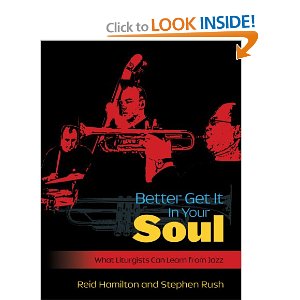 music, so I was initially more than a little intimidated by the idea of adding jazz to the liturgy. So, when my copy of Reid Hamilton and Stephen Rush’s book arrived, I did the sensible thing: I started at the back and checked out their bibliography. (This is my standard way of deciding whether I have wandered into foreign territory with a new author.) In this case, the expansive suggested reading list included works by Annie Dillard, John Bell, Meister Eckhart, Madeleine L’Engle and many more, with references to music ranging from Southern Harmony to Taize, from Bach to Coltrane. I was instantly hooked.
Authors Reid Hamilton and Stephen Rush are the Chaplain and Music Director of the Canterbury House at the University of Michigan and their Sunday night services do indeed include jazz and much, much more. They compare the liturgy of the service—the order of worship—to a jazz musician’s chart, a starting point and framework for creativity, improvisation, and the movement of the Holy Spirit. Their aim is to have liturgy and music “work together as a cogent and coherent whole.” The choice of music is not limited to jazz; in fact, “jazz” is used as a metaphor for any music that resonates with a congregation and engages participants. Depending on the parish, a “jazz mass” could just as easily be based on folk music, bluegrass, hip-hop, or even polkas!
From this premise, Hamilton and Rush proceed to address a variety of topics including musical style, liturgical planning, utilization of worship space, and, in particular, clergy-musician partnerships. They emphasize that this relationship is at the heart of collaborative liturgical planning: “Priests and musicians seeking a meaningful liturgical experience for their congregations are encouraged to start first with their relationship to each other–nurturing respect, love, sharing, and a common language to discuss their faith.”
The role of the church musician is explored more specifically in Chapter 10 (“Church Musician—Gig or Calling?”). Stephen Rush discusses an eclectic grouping of three great church musicians—Johann Sebastian Bach, Olivier Messiaen, and Thomas Dorsey—as well as his own journey as a church musician.
Along with the more philosophical considerations of liturgy and music there are plenty of “nuts and bolts” takeaways in the generous appendices, including sample Rite II outlines from Canterbury House services, a list of musical resources indexed by liturgical theme, as well as a Blues Mass and series of Psalm tones composed by Stephen Rush.
This is a valuable text for church musicians and clergy in any parish setting but it particularly provides a fresh view on liturgical planning for college campus services. As the authors suggest, college students are, after all, the Church’s best “beta testers” and campus ministry is a great place for a “liturgical laboratory”! This closing quote concerning church music is perhaps applicable to campus ministry in general:
“Great things take a lot of work, and this work is God’s. It’s worth it.”
Highly recommended:
Better Get It In Your Soul: What Liturgists Can Learn from Jazz
by Reid Hamilton & Stephen Rush
Church Publishing (2008)
ISBN: 978-0-89869-574-8
Available at Amazon: http://www.amazon.com/Better-Get-Your-Soul-Liturgists/dp/0898695740/ref=sr_1_1?s=books&ie=UTF8&qid=1300736266&sr=1-1
Teaching pigs to sing
“Never try to teach a pig to sing. It wastes your time and annoys the pig.”
 This post is actually not about pigs or voice lessons but about the wisdom of trying to do things that seem unlikely to succeed. Why should we be concerned with college campus ministry when there are so many other areas where our Christian outreach efforts might be more visibly effective and successful? Some would say from the start that what we are attempting–building an active Episcopal presence on campus–is an exercise in futility:
“College kids are too busy (i.e. having too much fun) for church, right?”
“You might get some to come but they are just showing up for a free meal, you know?”
“Don’t worry—kids drift away from the church in college but they’ll be back in a few years when they start getting married and raising kids of their own.”
Obviously, I disagree.
I do think many college students are incredibly busy—sometimes working strange weekend shifts that make regular Sunday morning church attendance impossible.
(Dropping in as a visitor for an occasional service has its own problems. In general, how welcoming are we to the college student who does show up as a visitor on a typical Sunday morning?)
I think students will show up for a meal, but many traditional church goers do the same! Why do you think churches plan so many activities around the traditional potluck supper?
As for drifting away and wandering back—well, perhaps. Some do. Many others will drift away to find other churches more interested in involving their generational dynamic. Others will just drift, and maybe for a long time.
The bottom line is that we take care of people in our lives that matter and college students should matter to those in the household of God. The Millennials (20-30 year olds) in our midst are part of our church family and campus ministry is one way to keep our relationship with them alive and well.
St Dunstan’s, which is the Episcopal Church at Auburn University, perhaps says it best in the following from their campus ministry newsletter:
“The Episcopal Church needs to see campus ministry and young adult ministry as the most important evangelism and mission area there is. It is where our culture is the most dynamic, most committed, most culturally diverse.”
Amen!
There’s more ahead. Thanks for reading!
Welcome!
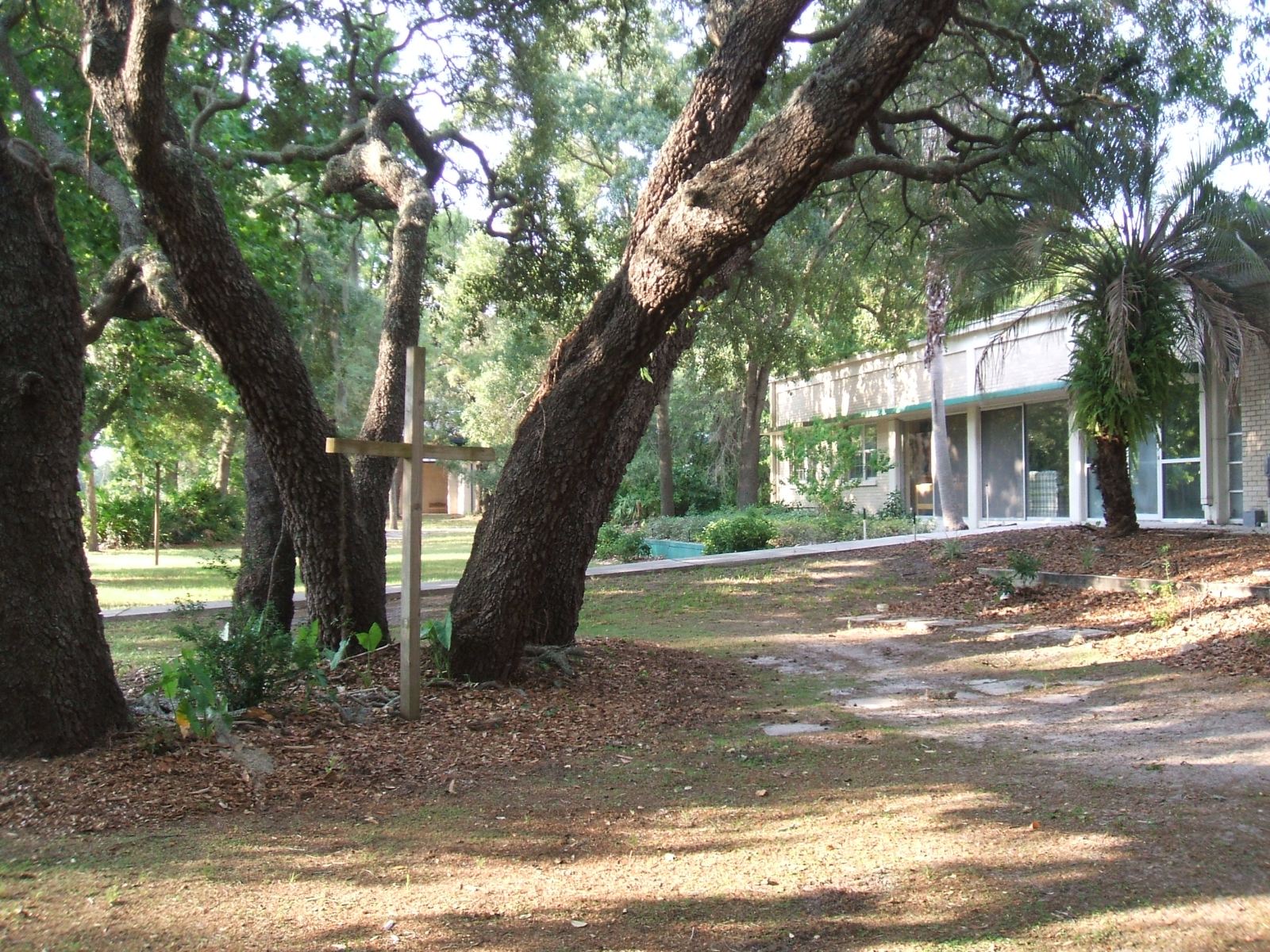
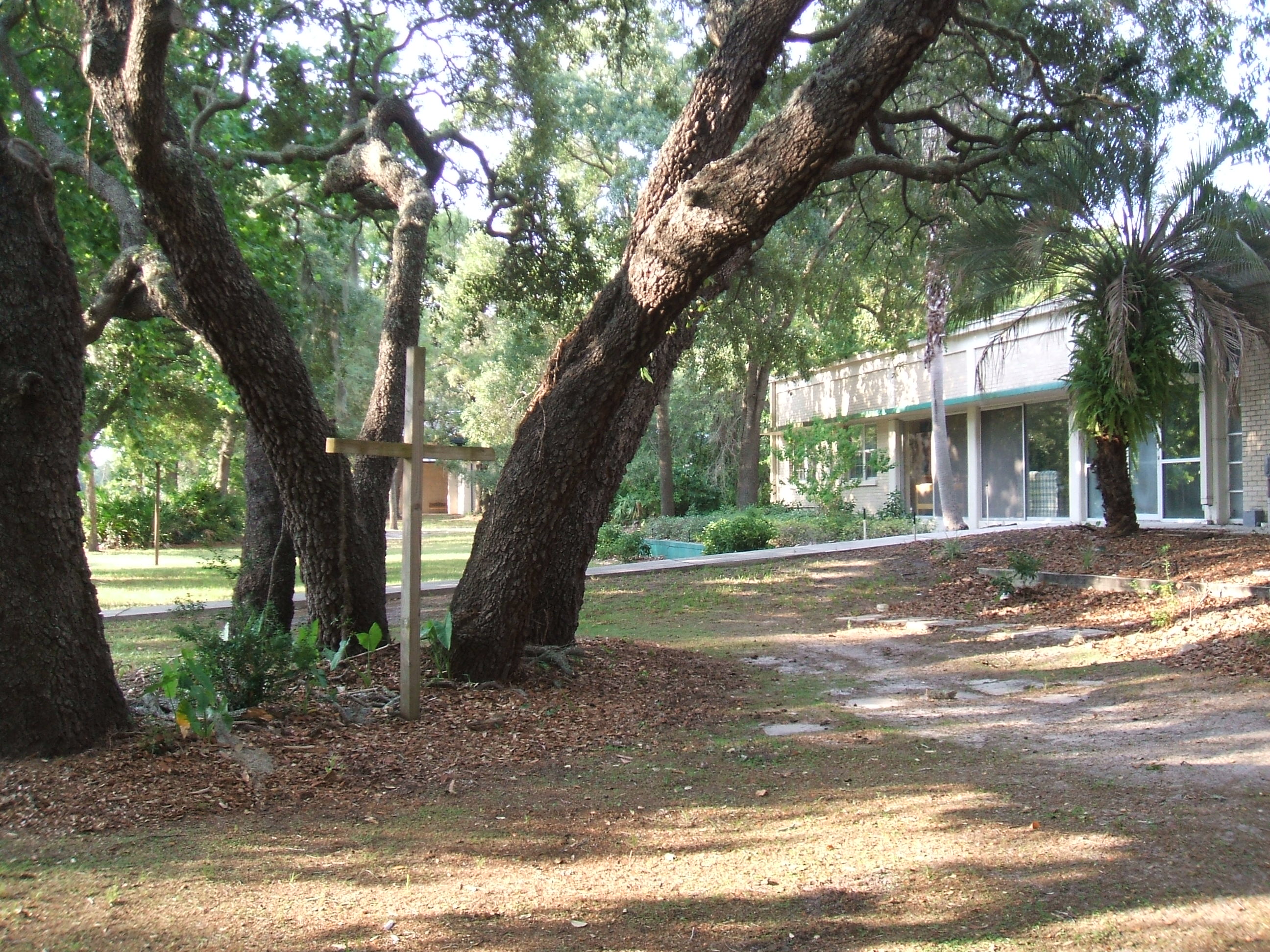
 Welcome to the Episco-Bulletin! I am one member of a small group currently working to revitalize the campus ministry activities based at the Chapel Center @ USF, which is the Episcopal presence on the campus of the University of South Florida (Go, Bulls!) in beautiful Tampa, Florida. We have a wonderful facility with a long history–unfortunately, its recent history has been mostly inactive! I hope to use this forum to explore the Chapel Center’s story and chronicle the progress we make in the months ahead.
When I first got involved with this project, I polled every priest and Episcopal clergy-type person I knew to ask what online and print resources were available for campus ministry. The answer seemed to be: not many! So, my second goal for this blog is to find out how the Episcopal Church (and the Church in general) is present on college campuses today. I hope to review some books, interview folks with thriving programs, and share whatever “best practices” I discover.
And, about the Episco-Bulletin name…..
When we first reopened the Chapel Center, my priest made the suggestion that,
Since Episocopals at FSU are the “Episco-Noles”
And Episocopals at UF are the “Episco-Gators”,
It made perfect sense that Episcopals at USF should be known as……
Well, I’m sure you get the picture. (Go, Episco-Bulls!)
St Anselm, the outstanding 11th century theologian for whom our chapel is named, is perhaps best know for his motto fides quarens intellectum, or “faith seeking understanding.” This refers to something along the lines of: “an active love of God seeking a deeper knowledge of God.” This is very appropriate for us at St Anselm’s Chapel: we are seeking a deeper knowledge of God through our worship and fellowship together.
Come along! We have an interesting journey ahead!
 Next Steps